
Uncategorized

Uncategorized

Industrial Hygiene: Controlling Workplace Health Hazards 

Introduction  Workplace safety is not limited to preventing accidents. Employees can also face health hazards caused by repeated or prolonged exposure to dust, fumes, chemicals, noise, heat, vibration and unsuitable working conditions. These hazards may not always produce immediate symptoms, making them harder to recognise without systematic assessment.  Industrial hygiene provides a structured approach to identifying, evaluating and controlling workplace health hazards. By examining workplace conditions and monitoring potential exposures, organisations can make informed decisions that improve employee health and working conditions.  What Is Industrial Hygiene?  Industrial hygiene, also known as occupational hygiene, focuses on anticipating, recognising, evaluating and controlling environmental factors that may affect worker health.  Chemical Hazards  Chemical hazards may include gases, vapours, solvents, fumes and other substances generated or used during workplace operations.  Physical Hazards  Physical hazards can include excessive noise, heat, vibration and inadequate illumination. These conditions may affect workers when exposure is not properly assessed or controlled.  Ergonomic Hazards  Ergonomic hazards can result from repetitive tasks, awkward postures, forceful movements or poorly designed workstations.  Why Is Industrial Hygiene Important?  Many workplace health hazards are not immediately visible. A facility may appear well maintained while workers are still exposed to airborne contaminants, excessive noise or other environmental stressors.  A structured industrial hygiene assessment can help organisations identify potential hazards and determine whether further monitoring or corrective action is required.  Identify Potential Exposures  Workplace surveys can help identify areas where employees may be exposed to dust, fumes, noise, heat, chemicals or other hazards.  Evaluate Workplace Conditions  Monitoring provides information about exposure conditions and helps organisations understand the nature and extent of potential workplace risks.  Support Better Controls  Assessment findings can guide decisions about engineering controls, administrative measures, work practices and personal protective equipment.  Common Workplace Health Hazards  Different industries can present different occupational health challenges. Manufacturing, construction, mining, pharmaceutical, chemical and petroleum environments may require specialised assessments.  Dust and Particulates  Dust can be generated through cutting, grinding, material handling, construction and other industrial processes. Monitoring can help identify areas where airborne particulate exposure may need to be addressed.  Fumes and Vapours  Industrial processes may produce fumes or vapours from chemicals, solvents, welding and other activities. Workplace exposure monitoring can help determine whether additional controls are necessary.  Noise  Noise is a common physical hazard in industrial environments. Area noise monitoring, noise mapping and personal dosimetry can help organisations understand noise exposure across different work areas and tasks.  Heat Stress  Employees working in hot environments or performing physically demanding activities may be exposed to heat stress. Monitoring workplace conditions can help identify areas requiring additional controls.  Vibration  Depending on the tools and machinery used, workers may experience hand-arm or whole-body vibration. Assessing vibration exposure can help identify potential risks associated with specific equipment or tasks.  How Industrial Hygiene Assessments Work  A systematic assessment generally moves from identifying potential hazards to evaluating exposure and determining appropriate controls.  Workplace Survey  The process can begin with a walkthrough survey. This helps identify processes, materials, equipment and areas that may require further investigation.  Monitoring and Analysis  Depending on the workplace, monitoring may cover dust, fumes, noise, heat stress, vibration, illumination, indoor air quality or other environmental parameters.  Evaluation  The collected information can then be reviewed to understand exposure conditions and identify areas where workplace improvements may be needed.  Control Measures  The final objective is to reduce or control exposure. Depending on the hazard, organisations may consider engineering controls, changes to work practices, administrative measures or appropriate PPE.  Indoor Air Quality and Workplace Health  Indoor air quality is another important area of workplace environmental assessment, particularly in enclosed or air-conditioned facilities.  Poor indoor air quality can affect comfort and wellbeing and may be associated with symptoms such as headaches, fatigue, eye irritation, throat irritation and breathing discomfort.  What Can Be Monitored?  Depending on the facility, assessments may include temperature, relative humidity, carbon dioxide, carbon monoxide, oxygen, particulate matter, total volatile organic compounds and biological parameters.  A building survey can also examine air-conditioning and air-handling systems to identify potential sources of indoor air quality concerns.  Ergonomics and Workplace Health  Ergonomic conditions can affect workers when tasks involve repetitive movements, awkward postures, excessive force or unsuitable workstation arrangements.  Ergonomic Assessment  An ergonomic assessment can review workstations and job activities to identify potential physical risks. Depending on the findings, organisations may consider workstation changes, improved work methods, task variation, job rotation or better placement of tools and equipment.  Controlling Workplace Health Hazards  Once workplace hazards have been identified and evaluated, organisations need appropriate control measures.  Engineering Controls  Engineering controls can address hazards through equipment design, ventilation, isolation or process modifications. These measures can reduce exposure at its source.  Administrative Controls  Administrative controls may include work procedures, scheduling, training, restricted access and other practices designed to manage exposure.  Personal Protective Equipment  PPE can provide an additional layer of protection where hazards cannot be completely eliminated through other controls. The selected PPE should be appropriate for the specific exposure and task.  Industries That Benefit From Industrial Hygiene  Industrial hygiene services can be relevant to many sectors.  Manufacturing  Manufacturing facilities may require assessment of dust, fumes, noise, chemicals, heat and ergonomic conditions.  Construction  Construction activities can involve dust, noise, vibration, heat and chemical exposures across changing work locations.  Pharmaceutical and Chemical Operations  These environments may involve specialised exposure considerations related to chemicals, processes and workplace conditions.  Mining and Heavy Industry  Mining and heavy industrial environments may require monitoring for dust, noise, vibration, heat and other occupational hazards.  Why Choose Sure Safety?  Sure Safety provides safety consulting and occupational health services for organisations seeking to identify and manage workplace hazards.  Its industrial hygiene approach covers workplace surveys, monitoring and analysis for areas such as dust, fumes, noise, heat stress, vibration, illumination, indoor air quality, ergonomics and other occupational exposure concerns.  Organisations looking for industrial hygiene services can use professional assessment to better understand workplace conditions and determine suitable control strategies.  Sure Safety also provides broader safety consulting and training services, supporting organisations that want to strengthen workplace safety practices and
Uncategorized

Safety Training: Building a Strong Workplace Safety Culture 

Introduction  Workplace safety is not created by equipment and procedures alone. A truly safe workplace depends on how consistently employees understand hazards, follow safe practices and respond to changing situations. This is why safety training plays an important role in developing a strong workplace safety culture.  Effective training helps employees understand their responsibilities, recognise hazards and apply appropriate safety practices during everyday activities. It can also help supervisors and managers identify unsafe conditions and encourage better communication across the organisation.  For organisations operating in construction, manufacturing, energy, pharmaceutical, oil and gas, healthcare and other industrial environments, training should be practical, relevant and aligned with the risks employees actually encounter.  What Is Workplace Safety Culture?  Workplace safety culture refers to the attitudes, behaviours, practices and shared responsibilities that influence how safety is managed within an organisation.  Safety as a Shared Responsibility  Safety should not be viewed as the responsibility of one department alone. Employees, supervisors, managers and leadership all contribute to maintaining safe working conditions.  From Awareness to Action  Simply knowing a safety rule does not always mean it will be followed correctly. Effective training helps employees understand why a procedure matters and how to apply it during actual work activities.  Why Is Safety Training Important?  A structured workplace safety training programme can help employees develop the knowledge and practical awareness required to perform their responsibilities safely.  Improve Hazard Awareness  Employees who understand common workplace hazards are better positioned to recognise unsafe conditions before they result in an incident.  Encourage Safe Work Practices  Training can reinforce correct procedures for activities involving equipment, materials, chemicals, working at height, emergency situations and other workplace risks.  Support Employee Confidence  When workers understand how to perform a task safely, they can approach their responsibilities with greater awareness and confidence.  Strengthen Communication  Training sessions can create opportunities for employees to discuss hazards, ask questions and share observations about workplace conditions.  What Should Effective Safety Training Include?  The content of training should reflect the hazards and responsibilities associated with each workplace.  General Health and Safety Awareness  General H&S awareness programmes can introduce employees to fundamental workplace safety concepts, hazard identification, safe behaviour and personal responsibility.  Risk Assessment  Risk assessment training can help employees understand how hazards are identified, evaluated and controlled before work begins.  Personal Protective Equipment  Employees should understand how PPE is selected, handled, maintained and used correctly. Training can cover different types of protection according to workplace hazards.  Emergency Preparedness  Workers should know how to respond during emergencies and understand relevant procedures for evacuation, firefighting and other emergency situations.  Practical Training for Different Workplace Hazards  Different activities require different forms of industrial safety training.  Work at Height  Employees working at height may require training related to fall protection, harness use, lifelines, safe access and relevant procedures.  Scaffold Safety  Scaffold safety training can help employees understand safe scaffold practices, inspection requirements and potential hazards associated with scaffold use.  Material Handling  Material handling training can address safe lifting, movement, handling procedures and the use of appropriate equipment.  Welding and Cutting  Welding and cutting activities can involve fire, heat, fumes, equipment and PPE-related hazards. Training should address safe practices relevant to these operations.  Hazardous Chemicals  Employees handling chemicals need awareness of potential hazards, safe handling practices, PPE requirements, storage and emergency response.  Training Methods That Encourage Better Learning  The effectiveness of training depends not only on what is taught but also on how it is delivered.  Interactive Sessions  Interactive classroom or virtual sessions can encourage participation and allow employees to ask questions about workplace situations.  Demonstrations and Visual Examples  Demonstrations can make safety procedures easier to understand, particularly when employees need to learn how to use equipment or perform a specific task.  Practical Exercises  Hands-on activities can help employees translate theoretical knowledge into practical workplace behaviour.  Group Discussions and Q&A  Discussions give participants an opportunity to raise concerns, share experiences and clarify areas they may not fully understand.  Sure Safety’s training approach includes classroom or virtual sessions, demonstrations, practical guidance, discussions and question-and-answer activities for relevant programmes.  Who Should Receive Safety Training?  Safety training should not be limited to newly hired employees.  New Employees  New workers need an understanding of workplace hazards, procedures and responsibilities before performing their assigned activities.  Technicians and Operators  Technical employees and operators may require task-specific training related to machinery, equipment and industrial processes.  Supervisors  Supervisors play an important role in monitoring workplace practices and reinforcing safe behaviour within their teams.  Managers and Leaders  Managers and leaders influence organisational priorities and can help establish safety as an ongoing business responsibility.  Building a Continuous Safety Culture  Safety training should not be treated as a one-time activity. Workplace conditions, equipment, processes and employee responsibilities can change over time.  Regular Refresher Training  Refresher sessions can reinforce important safety practices and address areas where employees may need additional awareness.  Training Based on Workplace Risks  Training should evolve according to changes in workplace hazards. New equipment, processes, materials or regulations may create a need for additional instruction.  Learn From Incidents and Observations  Near misses, incidents and workplace observations can provide useful information for identifying subjects that may require additional training.  Encourage Employee Participation  Employees who are encouraged to report hazards and contribute to safety discussions can become active participants in improving workplace conditions.  How Sure Safety Supports Workplace Safety Training  Sure Safety provides a broad range of HSE training programmes designed for different industries, employee levels and workplace requirements.  Its training portfolio includes programmes covering ergonomics, scaffold safety, safe rigging and slinging, welding and cutting, risk assessment, PPE handling, material handling, laboratory safety, industrial hygiene, hazardous chemical handling, general health and safety awareness and firefighting safety.  Organisations looking for HSE training programmes can access standard and customised training designed for different personnel levels, including technicians, engineers, leaders and managers.  Sure Safety also provides NEBOSH programmes, including the NEBOSH International General Certificate in Occupational Health & Safety, NEBOSH International Diploma in Occupational Health & Safety, NEBOSH Health & Safety at Work and NEBOSH HSE Certificate in Process Safety Management. 

Uncategorized

Fall Protection Systems: Choosing the Right Safety Equipment 

Introduction  Working at height is an essential part of many construction, maintenance and industrial activities, but it also introduces serious fall hazards. Workers may operate on rooftops, towers, scaffolding, platforms, ladders and other elevated structures where a fall can result in severe injury.  Choosing the right fall protection systems is therefore an important part of a workplace safety programme. However, effective protection involves more than simply providing workers with a harness. The equipment must match the task, work environment, movement requirements and anchorage arrangements.  Sure Safety provides engineered fall protection systems and equipment for construction, maintenance and industrial applications. Its solutions include harnesses, lanyards, lifelines, anchorages, fall arrest systems and other work-at-height solutions.  This guide explains the key components of fall protection and the factors to consider when selecting safety equipment for workers operating at height.  What Are Fall Protection Systems?  Fall protection systems are combinations of equipment and safety measures designed to protect workers from hazards associated with elevated work.  Depending on the task, a system may include personal protective equipment such as a full-body harness together with lanyards, lifelines or anchorage systems.  Why Is a Complete System Important?  A harness alone does not create a complete fall protection solution. It needs to be connected to suitable equipment and an appropriate anchorage point.  The complete setup should be selected according to the hazard and the worker’s activity. For example, a worker who needs to move horizontally across a roof may require a different arrangement from someone ascending a tower.  Sure Safety’s work-at-height solutions include vertical fall protection, horizontal lifelines, overhead lifelines, rigid rail systems, davit systems, fall arrest systems and temporary anchorage solutions.  Key Components of Fall Protection Equipment  Different work-at-height situations require different combinations of equipment.  Full-Body Harnesses  A full-body harness is a fundamental component of personal fall protection. It secures the worker and provides connection points for compatible fall protection equipment.  A properly selected and fitted harness can form the foundation of a fall restraint or fall arrest setup, depending on how it is used.  Lanyards  Lanyards connect a harness to an anchorage or other compatible connection point.  Positioning lanyards can help restrict worker movement, while energy-absorbing lanyards are designed for fall arrest applications. The appropriate type depends on the task and the protection system being used.  Lifelines  Lifelines allow workers to remain connected while moving through elevated work areas.  Vertical lifelines can support ascent and descent applications, while horizontal lifelines can provide protection when workers need to move along elevated surfaces.  Anchorages  An anchorage provides the connection point for a fall protection system. Its location and configuration should be appropriate for the specific work environment and compatible with the rest of the system.  How to Choose the Right Fall Protection System  Selecting suitable equipment should begin with an assessment of the actual work activity and fall hazard.  Assess the Work Environment  First, identify where the work will take place. Consider rooftops, towers, platforms, construction structures, ladders and elevated maintenance areas.  The physical layout of the site can determine whether workers need vertical, horizontal or fixed-position protection.  Identify Worker Movement  Consider how the worker needs to move while performing the task.  A fixed work position may require positioning equipment, while a worker moving along a roof may require a horizontal lifeline. Vertical activities may require a lifeline and compatible fall arrest equipment.  Determine the Required Protection  Fall protection can involve different approaches, including:  The objective is to select equipment that addresses the specific hazard rather than relying on a generic solution.  Important Factors When Selecting Safety Equipment  Equipment Compatibility  All components should work together as a complete system. The harness, lanyard, anchorage and lifeline should be suitable for the intended application.  Mobility Requirements  Determine whether the worker needs vertical movement, horizontal movement or a fixed working position. This helps identify the most suitable system configuration.  Site Conditions  Structural configuration, access points, available anchorage locations and surrounding hazards should be assessed before equipment is selected.  Fall Clearance  Available clearance below the working area is another important consideration when selecting fall arrest equipment. The system must be suitable for the available space and intended application.  Worker Training  Workers should understand how to wear, adjust, connect and inspect their equipment correctly. Proper training is an essential part of an effective work-at-height programme.  Permanent and Temporary Fall Protection Systems  The type of installation can depend on how frequently the work is performed.  Permanent Systems  Permanent systems can be appropriate for facilities where work at height is a recurring requirement.  These may include fixed anchorage points, horizontal lifelines, vertical fall protection systems and other engineered solutions designed for ongoing access and maintenance activities.  Temporary Systems  Temporary anchorage solutions can be useful when protection is required for specific tasks or locations without installing a permanent system.  The selection should consider the structure, task requirements, worker movement and expected duration of use.  Common Applications of Fall Protection Systems  Fall protection equipment can be required across many industries and work activities.  Construction  Workers may operate on elevated structures, scaffolding, roofs and other construction areas where fall hazards need to be addressed.  Industrial Maintenance  Maintenance teams may need access to elevated machinery, platforms, tanks and other infrastructure.  Tower and Vertical Work  Vertical fall protection can support workers ascending or descending towers, stacks and ladders.  Rooftop Work  Roof maintenance and installation can require suitable anchorage and horizontal fall protection systems to allow controlled movement.  Confined and Elevated Areas  Davit systems, tripods and related solutions can support access, fall protection and rescue requirements in suitable confined or elevated applications.  Inspection and Proper Use  Selecting the right equipment is only one part of an effective safety programme.  Inspect Before Use  Harnesses, lanyards and other equipment should be visually checked according to the manufacturer’s instructions. Look for damaged webbing, stitching problems, worn components or damaged hardware.  Follow Manufacturer Instructions  Equipment should be installed, adjusted, used and maintained according to the manufacturer’s instructions and the requirements of the application.  Replace After a Fall Event  Equipment that has arrested a fall

Uncategorized

Welding and Cutting Safety: Essential PPE and Workplace Practices 

Introduction  Welding and cutting are common activities across manufacturing, construction, fabrication, engineering and other industrial environments. These processes allow workers to join, shape and modify materials efficiently, but they can also create hazards involving heat, sparks, fumes, fire, equipment and electrical energy.  Workers involved in welding and cutting may be exposed to burns, harmful fumes, flying particles, fire hazards and other workplace risks when appropriate controls are not in place. This makes Welding and Cutting Safety: Essential PPE and Workplace Practices an important part of a strong workplace safety programme.  Effective protection requires more than providing PPE. Organisations need to identify the hazards associated with each task, maintain equipment, control the surrounding work area and train employees in safe operating practices. Businesses can strengthen their broader workplace protection approach through Sure Safety’s workplace safety solutions.  Common Hazards in Welding and Cutting  Heat and Burns  Welding and cutting generate extremely high temperatures. Contact with hot materials, equipment or sparks can cause serious burns. Workers should maintain appropriate distances from hot surfaces and use suitable protective clothing.  Sparks and Flying Particles  Sparks, molten metal and particles can travel beyond the immediate work area. Without appropriate protection, they can injure the eyes, face or exposed skin and may also ignite nearby combustible materials.  Welding Fumes and Gases  Welding and cutting processes can produce fumes and gases. The type and amount of airborne contaminants can depend on the materials and processes involved. Suitable ventilation and workplace controls are important for reducing exposure.  Fire and Explosion  Sparks and intense heat can ignite flammable materials, gases or vapours. Before work begins, the surrounding area should be assessed and combustible materials should be controlled appropriately.  Why PPE Is Important for Welding and Cutting  Personal protective equipment provides an important layer of protection against hazards that cannot be completely eliminated through other controls. PPE should be selected according to the task, materials, equipment and hazards identified during the workplace risk assessment.  Workers should understand the purpose and limitations of each item of PPE. Equipment should also be inspected before use and maintained according to established workplace procedures.  A suitable combination of PPE can help protect workers from heat, sparks, flying particles, fumes and other hazards associated with welding and cutting activities.  Essential PPE for Welding and Cutting  Welding Helmets and Eye Protection  Welding produces intense light and radiation that can damage the eyes if appropriate protection is not used. Welding helmets with suitable filters can provide protection during welding operations.  Eye protection may also be required for cutting, grinding and other activities that produce flying particles or sparks.  Protective Clothing  Flame-resistant or suitable protective clothing can help protect workers from sparks, molten metal and heat. Clothing should provide adequate coverage and should not have features that could easily catch sparks.  Workers should also ensure that clothing remains in suitable condition and is replaced when it becomes damaged or unsuitable for use.  Welding Gloves  Hands are particularly vulnerable to heat, sparks and sharp materials during welding and cutting. Suitable welding gloves can provide protection while allowing workers to handle equipment and materials safely.  Gloves should be selected according to the work activity and inspected regularly for damage.  Safety Footwear  Suitable safety footwear can help protect workers from hot materials, falling objects and workplace debris. Footwear should provide appropriate coverage and should be suitable for the industrial environment.  Organisations can review welding PPE and industrial safety equipment when developing protection requirements for employees involved in hot-work activities.  Safe Workplace Practices for Welding  Inspect Equipment Before Use  Welding equipment, cables, connections, torches and other components should be checked before work begins. Damaged equipment should not be used until it has been appropriately addressed.  Regular inspection can help identify defects that may otherwise contribute to electrical, fire or operational hazards.  Maintain Good Housekeeping  The work area should be kept clean and free from unnecessary combustible materials. Flammable substances should be removed or adequately controlled before welding begins.  Good housekeeping also helps reduce trip hazards caused by cables, tools and materials.  Ensure Adequate Ventilation  Welding fumes should be controlled through suitable ventilation and other workplace measures. The required controls depend on the process, materials and workplace conditions.  Where employees may be exposed to hazardous fumes, organisations should assess the exposure and implement appropriate controls.  Secure Gas Cylinders  Gas cylinders used during welding and cutting should be handled and stored appropriately. They should be protected from damage and positioned securely to prevent falling or uncontrolled movement.  Workers should also understand the correct procedures for connecting, transporting and using cylinders.  Safe Workplace Practices for Cutting  Cutting activities can generate intense heat, sparks, fumes and flying particles. Before beginning work, employees should inspect the equipment and confirm that the surrounding area is suitable for the activity.  Materials should be positioned securely to prevent unexpected movement. Workers should also maintain appropriate distances from sparks and hot materials and ensure that other employees in the area are adequately protected.  Where cutting equipment involves gases, hoses, regulators and cylinders, these components should be inspected and used according to established procedures.  Fire Prevention During Hot Work  Fire prevention is a critical part of welding and cutting safety. Before starting hot work, workers should identify nearby combustible materials and potential ignition hazards.  The work area should be appropriately prepared, and suitable fire protection equipment should be readily available where required. Workers should also understand the site’s emergency procedures and know how to respond if a fire or unexpected event occurs.  Hot work areas should be monitored appropriately after work when necessary because heated materials or concealed sparks can continue to present fire risks.  Organisations can strengthen their approach through workplace fire safety and industrial safety training.  Training for Welding and Cutting Workers  Employees performing welding and cutting activities need practical knowledge of the hazards associated with their work. Training can help workers understand PPE requirements, equipment checks, safe operating procedures, fire prevention and emergency response.  Training should be relevant to the specific processes and workplace conditions. Workers should also understand

Uncategorized

Fire Safety at the Workplace: Essential Fire Protection Equipment & Why NEBOSH Training Matters

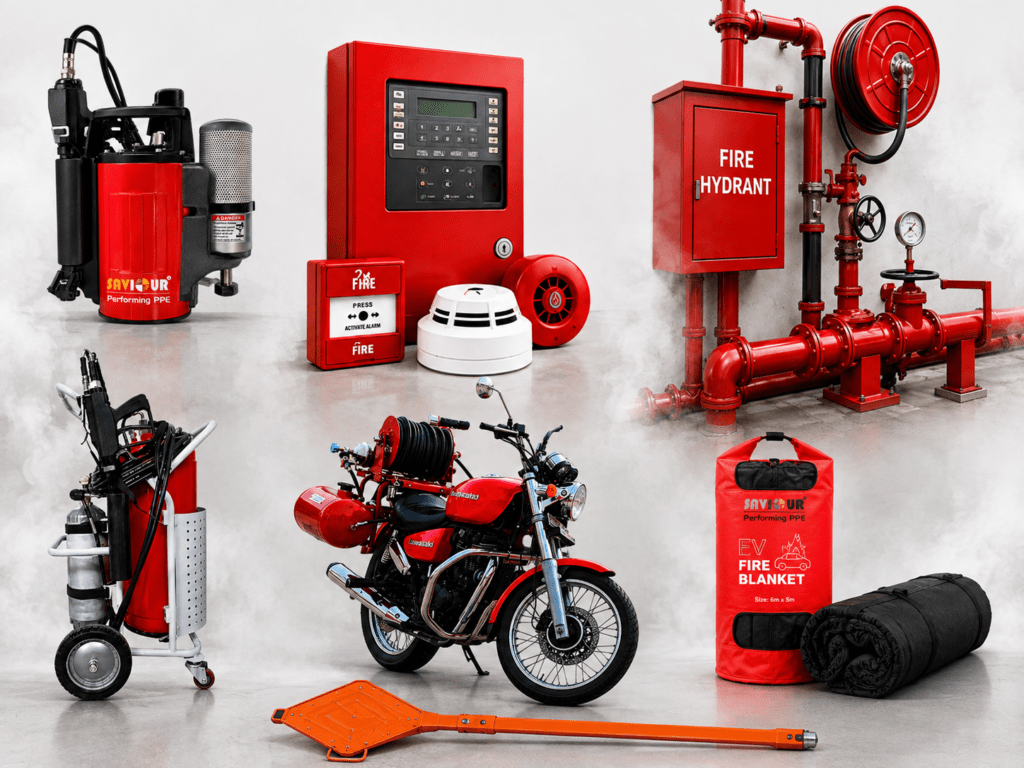
Fire remains one of the most destructive workplace hazards — capable of destroying property, halting operations, and endangering lives within minutes. Yet many organizations still treat fire safety equipment as a one-time compliance purchase rather than an ongoing program. A fire extinguisher mounted on a wall is only useful if the right type is chosen for the hazard, it’s properly maintained, and someone actually knows how to use it. This guide covers the core categories of fire protection equipment every Indian workplace should have, and why pairing equipment with recognized training — like NEBOSH — closes the gap between “compliant” and “actually prepared.” Understanding Fire Classes Fire extinguishers aren’t interchangeable — using the wrong type can make a fire worse. Fires are generally classified as: Matching extinguisher type to fire class is the single most important decision in fire protection equipment selection. Core Fire Protection Equipment 1. Fire Extinguishers Sure Safety India offers a wide range of fire extinguishers under its Saviour brand, including CO2, mechanical foam, powder, clean agent, water, and wet chemical types in various sizes — such as the Saviour Fire Extinguisher CO2 (available in 2 kg, 3 kg, and 4.5 kg variants) and the Saviour Fire Extinguisher Mechanical Foam (6 litre). Having the correct extinguisher type available at the correct location is far more important than simply having “enough” extinguishers. 2. Fire Blankets Compact and effective for smothering small fires — particularly Class K kitchen fires or fires involving clothing — fire blankets are a low-cost addition that every facility with a pantry, kitchen, or lab should stock. 3. Fire Suits and Protective Clothing For personnel who may need to approach active fire hazards — maintenance teams near high-heat equipment, or dedicated fire response staff — flame-resistant fire suits provide direct-contact protection that standard workwear cannot. 4. Fire Hydrant and Sprinkler Systems Beyond portable equipment, larger facilities require fixed fire suppression infrastructure. Sure Safety India has implemented hydrant systems, high-velocity water spray transformer protection, and firefighting systems across multiple industrial and manufacturing facilities in India — a reminder that fire safety at scale is a systems-design problem, not just a product purchase. 5. Fire Detection and Alarm Systems Early detection buys critical time. Smoke detectors, heat sensors, and alarm systems should be integrated with your extinguisher and evacuation planning rather than treated as a separate checklist item. Matching Equipment to Fire Risk Facility Type Priority Equipment Offices, general workspaces Class A extinguishers, smoke detectors Chemical/solvent storage Class B/foam extinguishers, fire suits for response teams Kitchens, canteens Class K extinguishers, fire blankets Electrical rooms, server rooms CO2/clean agent extinguishers (non-conductive) Large manufacturing plants Hydrant systems, sprinklers, fixed suppression + portable extinguishers Why Equipment Alone Isn’t a Fire Safety Program A fully stocked fire safety cabinet means little if nobody on-site knows how to respond under pressure. This is where structured training becomes essential — and it’s a significant part of why Sure Safety India, as a Gold NEBOSH Partner, also offers NEBOSH training programs alongside its equipment range. NEBOSH (National Examination Board in Occupational Safety and Health) courses are internationally recognized qualifications that go well beyond “how to use a fire extinguisher.” They build a genuine understanding of hazard identification, risk assessment, and fire safety management systems — equipping safety officers and managers to design and audit fire safety programs, not just react to them. A well-rounded fire safety strategy typically combines:

Uncategorized

Working at Height Safely: A Guide to Fall Protection Harnesses & Equipment

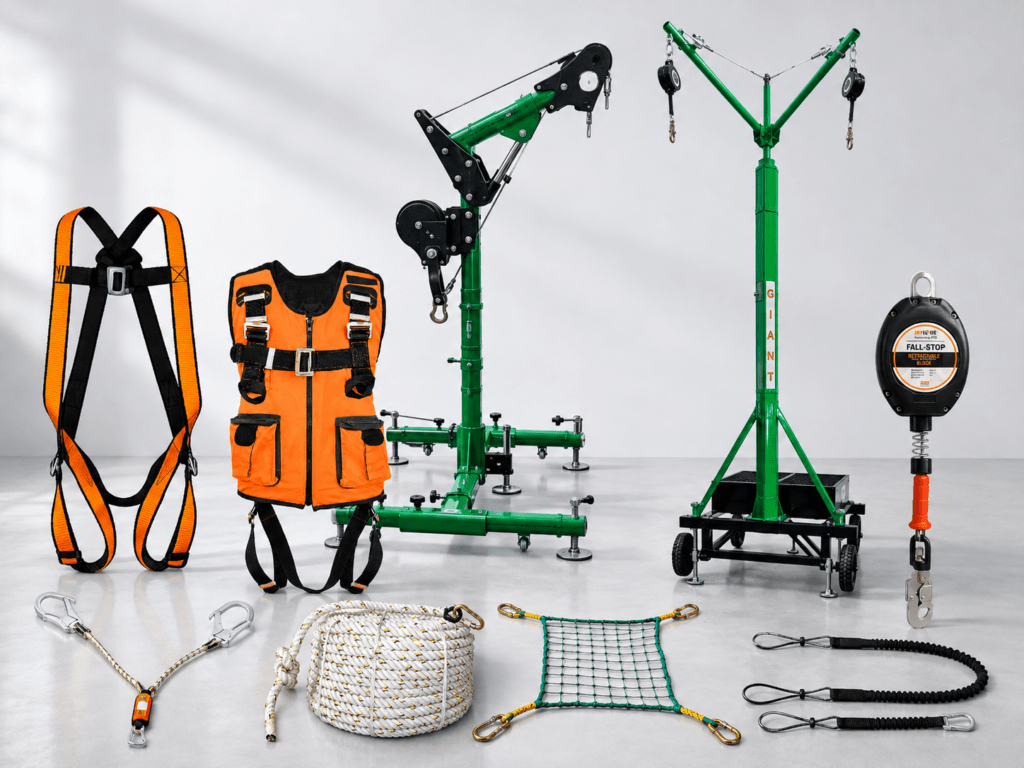
Falls from height are consistently among the leading causes of workplace fatalities across construction, infrastructure, and industrial maintenance in India. Unlike many other workplace hazards, the consequences of an unprotected fall are rarely minor — which is exactly why fall protection harness equipment sits at the top of the safety hierarchy for any work conducted above ground level. Whether it’s scaffolding work, tower maintenance, warehouse racking, or rooftop installation, the right fall protection system is the difference between a controlled stop and a catastrophic injury. Understanding the Fall Protection Hierarchy Before selecting equipment, it helps to understand how fall protection is typically categorized: Most industrial fall protection equipment — harnesses, lanyards, lifelines — falls into the restraint and arrest categories, which is where Sure Safety India’s fall protection range is focused. Core Components of a Fall Protection System 1. Full Body Harnesses A full body harness distributes the force of a fall across the shoulders, thighs, and pelvis rather than concentrating it on a single point — critical for both survivability and reducing post-fall injury. Sure Safety India’s Full Body Safety Harness range includes harnesses and safety hooks designed to protect workers from falls while working at height, forming the foundation of any height-safety program. 2. Lanyards Lanyards connect the harness to an anchor point and come in two main types: positioning lanyards (which restrict movement to prevent reaching a fall hazard) and energy-absorbing lanyards (which reduce the force transmitted to the body during a fall arrest). 3. Lifelines Vertical or horizontal lifelines allow workers mobility along a structure while remaining continuously connected to fall protection — common on rooftops, towers, and long linear worksites like pipelines or transmission lines. 4. Rope Grabs and Fall Arrestors These devices travel along a lifeline and lock automatically if a fall occurs, allowing free movement during normal work while still providing arrest capability the instant a fall is detected. 5. Body Belts Used specifically for positioning work (not fall arrest), body belts hold a worker in place at a work position but should never be used as the sole protection against a free fall — a common and dangerous misuse in the field. Choosing the Right Fall Protection Setup Task Recommended Equipment Scaffolding, tower work Full body harness + energy-absorbing lanyard Rooftop work with lateral movement Full body harness + horizontal lifeline Confined space/vertical access Full body harness + rope grab fall arrestor Positioning at a fixed work point Full body harness + positioning lanyard/body belt Rescue and emergency descent Fall protection kit with rescue-rated components Practical Guidelines for a Working-at-Height Program Why Fall Protection Needs a System, Not Just Equipment Buying a harness is only the starting point. A genuinely effective working-at-height program combines:

Uncategorized

Respiratory Protection Explained: Masks, Respirators & Cartridges for Industrial Workers

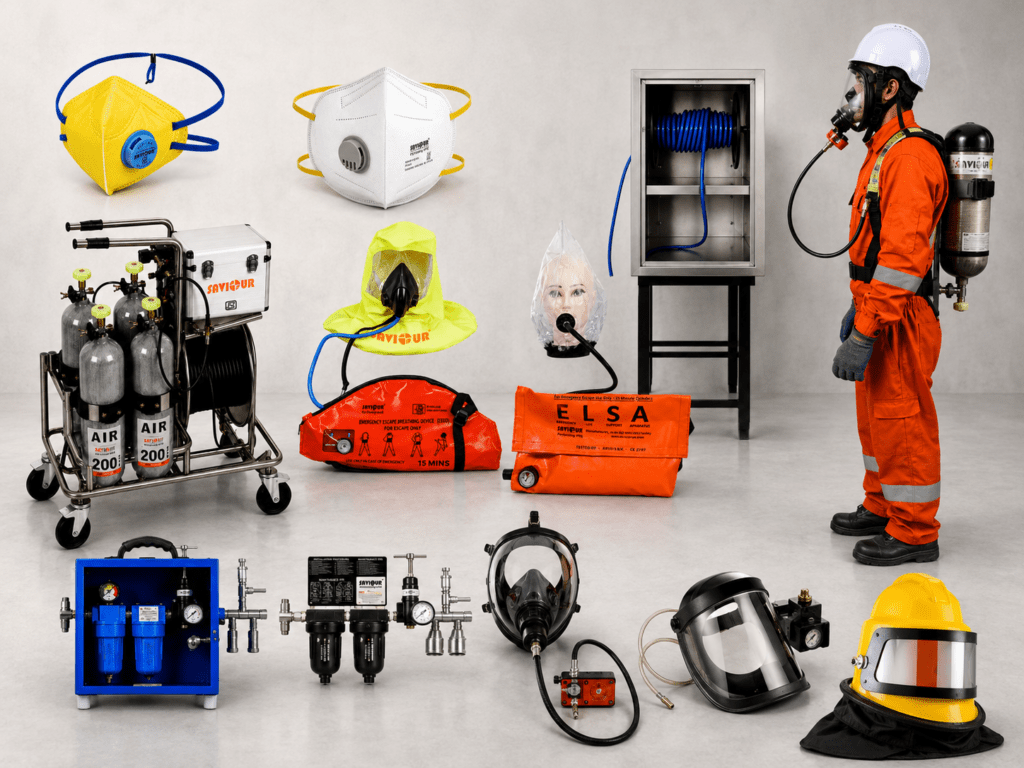
Airborne hazards are among the most dangerous — and least visible — risks in Indian industry. Dust, fumes, vapors, and toxic gases don’t announce themselves the way a sharp edge or hot surface does, which is exactly why respiratory protection PPE is so often under-prioritized until an incident forces the issue. Long-term exposure to unfiltered air can cause chronic respiratory illness, while acute exposure to toxic gases can be fatal within minutes. This guide walks through the main categories of respiratory protection, when each is appropriate, and how to build a program that actually gets used correctly. Common Airborne Hazards at Indian Worksites Each hazard type demands a different level of respiratory protection — from a basic dust mask to a fully self-contained breathing apparatus. Types of Respiratory Protection 1. Disposable Dust Masks The simplest form of protection, suitable for nuisance dust and low-risk particulate environments such as general construction or light manufacturing. These are not appropriate for chemical vapors or oxygen-deficient spaces. 2. Half-Face and Full-Face Respirators For tasks involving welding fumes, solvent vapors, or fine particulates, cartridge-based respirators offer a significant step up in protection. The 3M 2091 Twin Cartridge Filter, available through Sure Safety India, is rated as a P100 dust filter and is suitable for welding, brazing, torch cutting, metal pouring, soldering, and exposure to hazardous particulates like lead and cadmium — protecting up to 10 times the Permissible Exposure Limit (PEL) with half-facepieces, or 50 times PEL with full-face respirators. 3. Powered Air-Purifying Respirators (PAPRs) PAPRs use a battery-powered blower to push filtered air into a mask or hood, reducing breathing resistance and improving comfort for workers who need extended respiratory protection during long shifts — common in pharmaceutical manufacturing and hazardous material handling. 4. Self-Contained Breathing Apparatus (SCBA) For the highest-risk environments — confined spaces, oxygen-deficient atmospheres, or emergency response — nothing short of a full SCBA set is appropriate. Sure Safety India’s SCBA Class 1 equipment supplies workers with an independent air source, making it essential for fire rescue teams, tank entry crews, and emergency responders in chemical facilities. Matching Respiratory Protection to the Hazard Hazard Level Recommended Equipment Nuisance dust, low-risk particulates Disposable dust mask Welding fumes, moderate particulates Half-face respirator + P100 cartridge (e.g., 3M 2091) Solvent vapors, chemical fumes Full-face respirator with appropriate cartridge Extended shifts, comfort-critical tasks PAPR Oxygen-deficient/confined space, emergency response SCBA Class 1 Getting Respiratory Protection Right: Practical Considerations Building a Respiratory Protection Program A genuinely effective program combines the right equipment with the right process:

Uncategorized

Hand Protection 101: Choosing the Right Safety Gloves for Your Industry

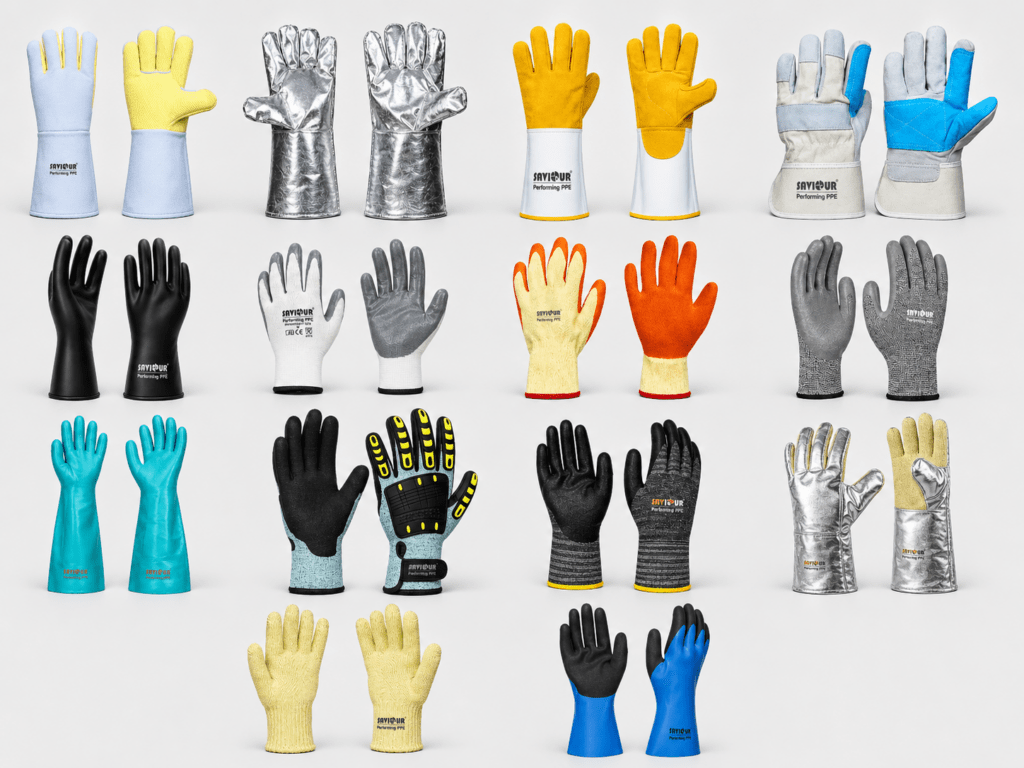
Hands are involved in nearly every task on a worksite — which also makes them one of the most frequently injured body parts. According to occupational safety data across manufacturing and construction sectors, hand and finger injuries consistently rank among the top causes of lost workdays. The good news: most of these injuries are preventable with the right safety gloves matched correctly to the task. The challenge is that “hand protection” isn’t a single category — cut resistance, chemical resistance, heat resistance, and grip each require a different glove construction. Using the wrong glove for the job can be almost as risky as using none at all. Understanding Glove Hazard Categories Before choosing gloves, identify what you’re actually protecting against: Types of Safety Gloves and Where They Fit 1. Leather Hand Gloves Leather remains a workhorse material for general industrial handling because it balances durability with dexterity. The Saviour Leather Hand Gloves from Sure Safety India are made from good-quality leather offering cut and puncture resistance — well suited to material handling, construction, and general maintenance work where workers need protection without sacrificing grip. 2. Nitrile Exam Gloves For laboratory, medical, or light chemical-handling tasks, disposable nitrile gloves offer a thin, form-fitting barrier without bulk. The Saviour Nitrile Exam Hand Gloves are designed for handling general laboratory chemicals and medical-related hazards, supplied in dispenser boxes of 100, with a 0.1 mm thickness suited to tasks requiring fine motor control. 3. Cut-Resistant Gloves Used wherever sharp materials — metal sheets, glass, blades — are handled regularly. These are typically rated against cut-resistance standards (e.g., ANSI/ISEA or EN 388 cut levels) and are essential in metal fabrication, glass processing, and warehousing. 4. Chemical-Resistant Gloves Built from materials like nitrile, neoprene, or PVC in thicker gauges, these protect against solvent and acid exposure during chemical transfer, cleaning, or processing tasks. 5. Thermal/Heat-Resistant Gloves Designed for welding, foundry, and furnace work, these gloves protect against direct heat and molten splash, often combining leather or aramid fiber construction. How to Match Gloves to the Job Task/Industry Recommended Glove Type General material handling, construction Leather hand gloves Lab work, medical, light chemical tasks Nitrile exam gloves Metal fabrication, glass handling Cut-resistant gloves Chemical processing, cleaning Chemical-resistant gloves Welding, foundry work Thermal/heat-resistant gloves A few practical buying considerations: Building a Practical Glove Program An effective hand-protection program isn’t just about stocking gloves — it’s about making sure the right glove is available at the point of task. Many facilities benefit from:

Uncategorized

Chemical Splash Protection: Choosing the Right PPE for Workers 

Introduction  Chemical handling is a routine part of many industrial workplaces, including manufacturing, pharmaceuticals, laboratories, oil and gas, healthcare and chemical processing. While chemicals can be essential to production and daily operations, accidental splashes can expose workers to substances that may cause skin irritation, burns, eye injuries or other serious harm.  This makes Chemical Splash Protection: Choosing the Right PPE for Workers an important part of an effective workplace safety programme. Selecting suitable personal protective equipment can help reduce exposure when workers handle, transfer, mix, clean or work near hazardous chemicals.  However, PPE should not be selected simply because it is labelled as chemical resistant. The right protection depends on the substance, concentration, task, duration of exposure and potential route of contact. A comprehensive approach to workplace protection can be supported through Sure Safety’s workplace safety solutions.  What Is Chemical Splash Protection?  Chemical splash protection refers to the protective measures used to reduce worker exposure to liquid chemicals that may accidentally come into contact with the skin, eyes or clothing.  Unlike complete immersion or prolonged chemical contact, splash exposure may occur suddenly during pouring, transferring, mixing, cleaning or equipment maintenance. Even a small amount of an unsuitable chemical can present a significant hazard depending on its properties.  Effective protection combines safe handling procedures, engineering controls, appropriate PPE, employee training and emergency preparedness.  Common Situations Where Chemical Splashes Occur  Chemical Transfer and Pouring  Moving chemicals between containers can create splash risks, particularly when workers handle liquids manually or work with pressurised systems.  Mixing and Processing  Chemical mixing activities may involve reactions, agitation or unexpected splashing. Workers should understand the hazards of the substances involved before beginning the task.  Equipment Cleaning and Maintenance  Residues may remain inside equipment, pipes, tanks or containers after normal operations. Maintenance workers can therefore encounter chemical exposure risks even when a process has stopped.  Accidental Spills  Leaks, damaged containers and unexpected releases can expose workers to chemicals. Appropriate emergency procedures and suitable PPE are important when responding to such situations.  Why Choosing the Right PPE Matters  Chemical-resistant PPE is designed to create a barrier between workers and hazardous substances. However, no single type of protective equipment is suitable for every chemical or task.  The effectiveness of PPE depends on factors such as the chemical’s properties, concentration, temperature, contact duration and method of exposure. Incorrect selection can leave gaps in protection and create a false sense of security.  PPE should therefore be selected as part of a risk assessment rather than as an isolated safety decision.  Essential PPE for Chemical Splash Protection  Chemical-Resistant Gloves  Hands are frequently exposed during chemical handling, making gloves an important part of chemical splash protection. The glove material should be suitable for the specific chemical and task.  Workers should also inspect gloves before use for cuts, tears, degradation or other visible damage. Gloves should be replaced according to workplace procedures and manufacturer guidance.  Protective Clothing  Chemical-resistant coveralls, aprons or other protective garments can help prevent liquid chemicals from reaching the skin or personal clothing.  The level of protection required depends on the type and quantity of chemical involved. Garments should provide suitable coverage without restricting safe movement or creating additional workplace hazards.  Eye and Face Protection  Chemical splashes can cause serious eye injuries. Suitable safety goggles or other eye protection can help create a barrier against liquid droplets and splashes.  Where the task presents a greater risk of facial exposure, additional face protection may be necessary alongside appropriate eye protection.  Protective Footwear  Workers handling chemicals may also require suitable chemical-resistant footwear. Footwear should provide adequate coverage and be compatible with the substances encountered in the workplace.  Organisations can consider chemical safety PPE and protective equipment as part of a broader approach to reducing workplace exposure.  How to Choose the Right Chemical PPE  Identify the Chemical Hazard  The first step is understanding the chemical being handled. Safety information should be reviewed to identify relevant hazards, potential exposure routes and recommended protective measures.  Consider the Work Activity  PPE requirements can vary depending on whether a worker is transferring, mixing, cleaning, inspecting or responding to a spill. The same chemical may require different protection for different tasks.  Consider Exposure Duration  The length of potential contact can influence the level of protection required. Short-duration splash exposure and prolonged chemical contact should not automatically be treated as the same risk.  Check PPE Compatibility  Protective equipment should be suitable for the chemical and workplace conditions. Materials that resist one substance may not provide the same protection against another.  Workers should also ensure that different PPE items can be worn together without creating gaps or interfering with safe movement.  Safe Practices for Using Chemical PPE  Correct PPE selection is only one part of effective chemical splash protection. Workers should be trained to inspect equipment before use and identify signs of damage or deterioration.  PPE should be put on and removed carefully to minimise the possibility of transferring contaminants to skin, clothing or other surfaces. Reusable equipment should be cleaned and stored according to established procedures.  Workers should also understand what to do if PPE becomes contaminated or damaged during a task. Emergency washing facilities and other response measures should be readily accessible where chemical exposure is possible.  The Role of Chemical Safety Training  Employees need more than equipment to work safely with chemicals. They should understand the hazards associated with the substances they handle and know how to use protective equipment correctly.  Training can cover chemical hazard awareness, PPE selection, safe handling procedures, emergency response and workplace-specific controls. Practical demonstrations can help employees understand how PPE should be worn, inspected and removed.  Supervisors should also understand the requirements of chemical handling activities so they can reinforce safe practices and identify unsafe conditions.  Organisations looking to strengthen employee awareness can incorporate chemical safety training and workplace safety programmes into their broader HSE approach.  Building a Strong Chemical Safety Culture  Chemical splash protection should not depend entirely on individual workers remembering safety rules. Organisations should create systems that make safe chemical

Uncategorized

Eye & Face Protection at Work: Why Safety Goggles and Face Shields Are Non-Negotiable

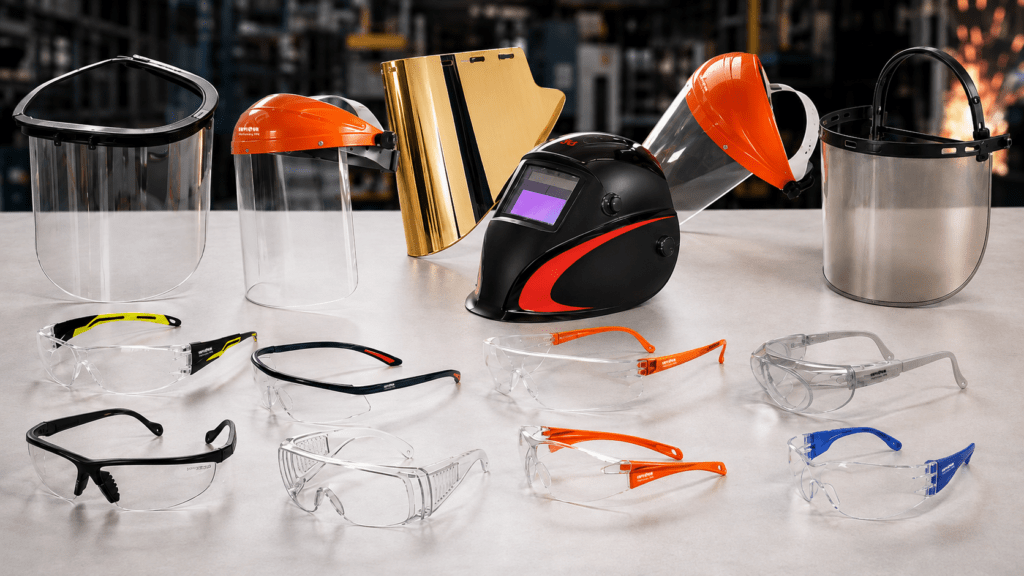
Your eyes are among the most exposed and least forgiving parts of your body at a worksite. A single spark, chemical splash, or flying particle can cause permanent damage in seconds — yet eye injuries remain one of the most under-reported categories of workplace incidents in India, largely because workers assume “it won’t happen to me.” Investing in the right eye protection PPE isn’t a compliance checkbox; it’s a direct safeguard against irreversible harm. Common Eye & Face Hazards at Indian Worksites Depending on your industry, your workforce may be exposed to: Each hazard calls for a different type of protection, which is why “one goggle for everyone” is rarely the right approach. Types of Eye & Face Protection PPE 1. Safety Goggles Close-fitting goggles form a seal around the eyes, making them ideal for chemical splash and dust environments. The 3M 1709 Safety Eyewear, available through Sure Safety India, offers wide frontal coverage, lateral protection, and a lightweight one-piece lens construction — a practical option for general industrial use where comfort during long shifts matters as much as protection. 2. Face Shields Face shields protect the entire face — not just the eyes — from splashes, sparks, and impact. They’re typically used alongside safety goggles (not instead of them), especially in grinding, chemical handling, or machining tasks where secondary splash risk to the face is high. 3. Welding Screens & Shaded Lenses For welding, brazing, and cutting work, standard clear goggles aren’t enough — shaded or auto-darkening lenses are required to protect against intense light and UV/IR radiation. 4. Prescription-Compatible Safety Eyewear Many industrial eyewear ranges, including 3M’s safety eyewear line, are designed to comfortably accommodate workers who wear prescription glasses, removing a common excuse for skipping protective eyewear altogether. How to Choose the Right Eye Protection Hazard Type Recommended PPE Dust, flying particles Wraparound safety goggles Chemical splash Sealed goggles + face shield combo Welding, cutting Shaded welding goggles/screens Grinding, machining Safety goggles + face shield General site visits/office-to-floor movement Lightweight safety eyewear (e.g., 3M 1709) When selecting eyewear, look for: Building a Complete Eye & Face Protection Program Supplying goggles alone isn’t enough — a genuinely effective eye protection program includes:

Scroll to Top